



By the time a round reaches investment committee, the founder has usually cleared a round of reference calls and a careful search engine pass. Both are useful, but references are chosen by the founder and search results favor what the founder has published, so neither is built to surface a lawsuit from a prior venture or a lien filed in a state they left years ago. Public records are, and a good share of them can be searched for free in about an hour if you know where each one lives and what to bring with you.
A company incorporated two years ago has had two years to build a record, which usually amounts to a formation filing and little else. The founder has had twenty or more years of adult life, often across several states and earlier companies, and that is where lawsuits, judgments and liens have had time to accumulate. On an entity younger than about two years, our recommendation would be to spend less on the company and put the time into the people running it, since a business that has barely had time to be sued has little to tell you. The broader argument is in our piece on why a background check should cover principals too.
Court and recorder indexes are searched by name, and a name on its own is a weak key. The most common false match in this work is a common name searched without a second identifier, which returns either someone else's record or a clean result that is clean only because the search was too narrow. Before searching, gather what you need to tell your founder apart from everyone who shares the name.
Most of this is already in the data room, and a founder raising capital expects to be asked for the rest.
With identifiers in hand, the first pass covers five sources, each searched a little differently.
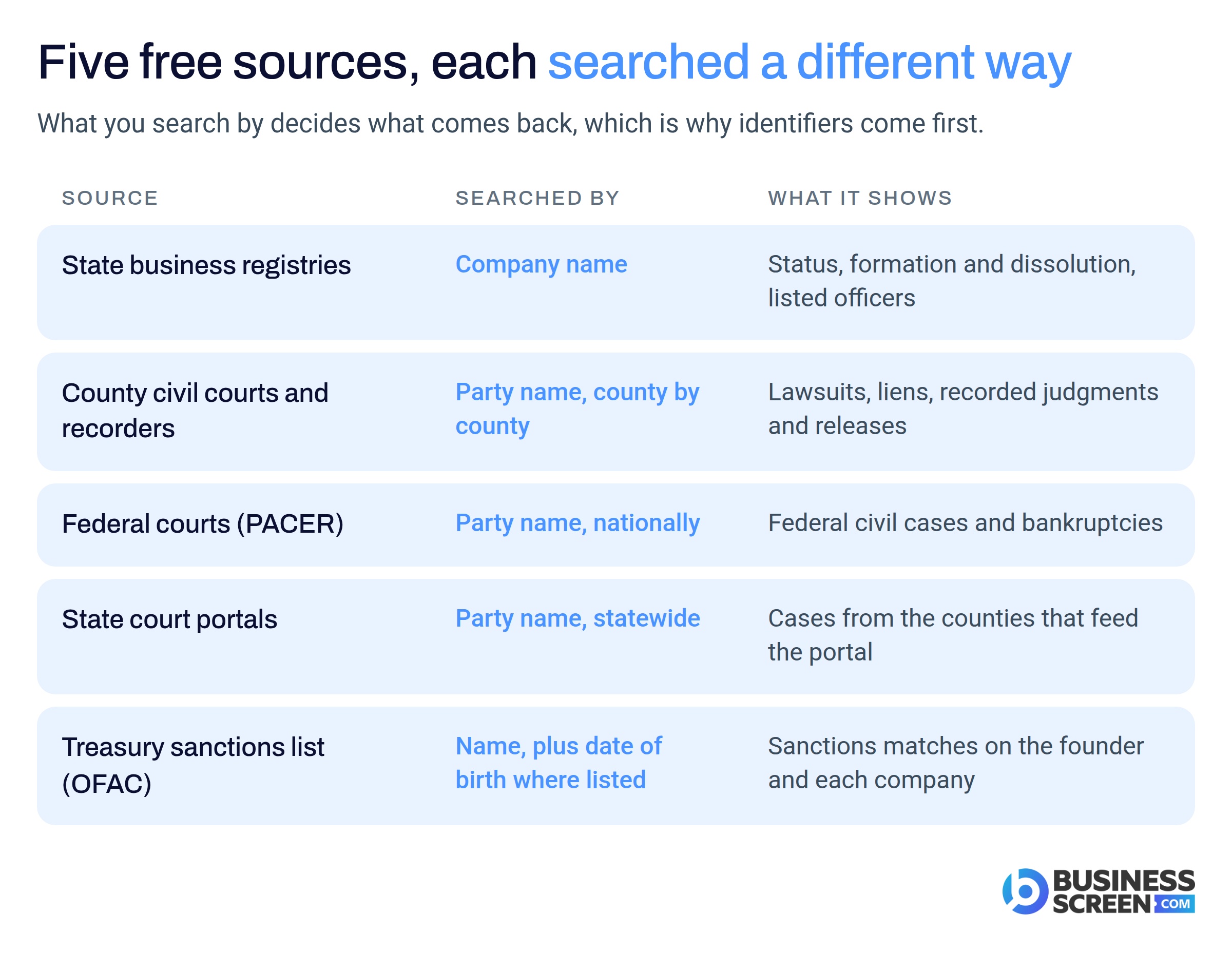
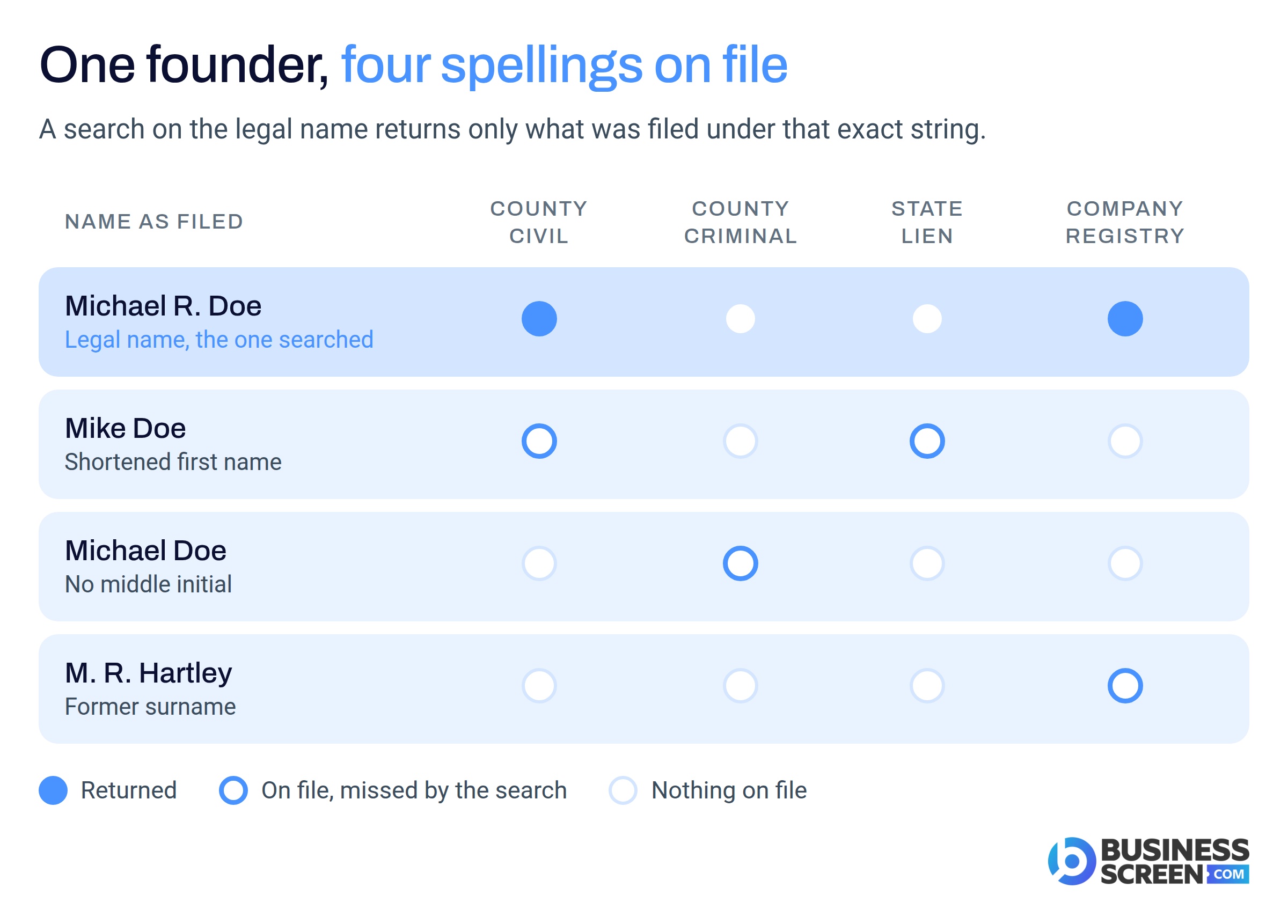
Records stay where they were filed. A judgment entered in a county the founder left five years ago does not follow them to a new address and will not appear in a search of where they live now, which is why the address history carries more weight than any single search. Indexes are just as literal about names, so a judgment filed under Michael R. Doe will not come back on a search for Mike Doe. We would search each county under each variation the identifiers support, and treat any hit with the same care in reverse, since several common misreads come from attributing someone else's record to the subject.
Most of what a first pass finds is context rather than a reason to walk away. A dismissed case shows that a dispute existed, not that the founder was at fault. A satisfied lien means the obligation was paid, which can say more about how the founder handles a problem than the filing itself. A judgment against a former company belongs to that company, though it is worth checking whether the founder was named personally and how the venture ended.
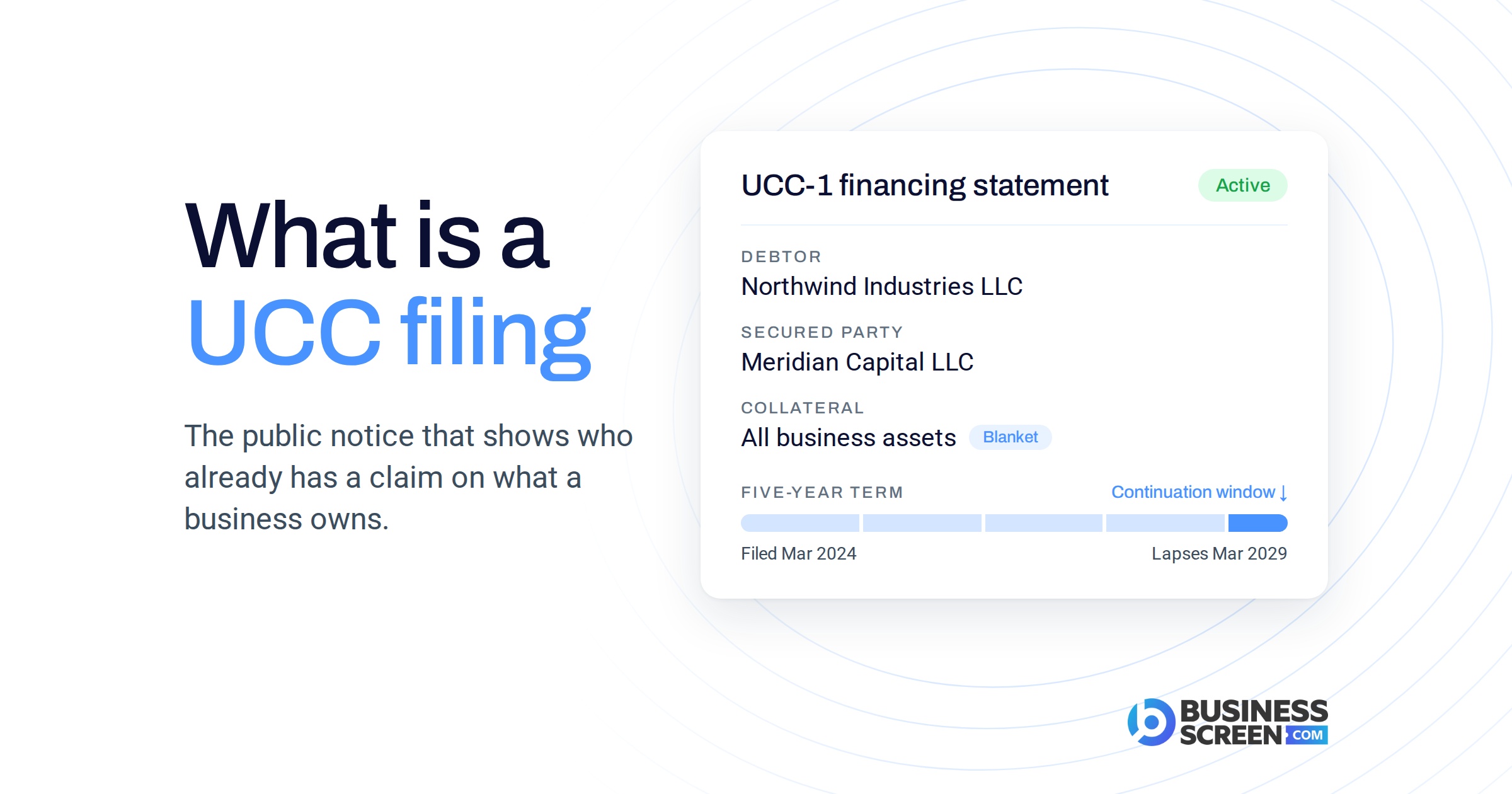
What deserves more attention is a pattern, such as repeated suits from vendors or investors, judgments left unsatisfied, or liens that follow the founder from one company to the next. A single finding rarely settles the question on its own, and a confirmed sanctions match is the clearest exception. Our guide to reading liens and judgments goes further into how status changes what a record means.
A clean first pass is worth having, and it has edges worth naming before anyone treats it as the final word.
Those edges are where it makes sense to bring in investigators, who can search at the courthouse, confirm identity against records that carry more identifiers, and cover the counties where criminal history actually lives.
A committee does not need every record, but it does need to know what was looked at. A short paragraph stating which names and variations were searched, in which counties and systems, on what date, what came back with its status, and what the pass could not cover gives the committee an honest picture and leaves a record of the work for later.
If you have a founder in front of you and committee on the calendar, hit Get Started below and fill out the form. Our investigators can look at what you have already run and tell you where a deeper check would change the picture, and where it would not.
When the stakes outgrow a first pass, our investigator-led reports return in two business days, or three for a twenty-year lookback across multiple name variations and jurisdictions.






.png)
